
In today’s fast-paced world where technology underpins nearly every aspect of life, effective cable management has emerged as a critical necessity for ensuring the safety, performance, and organization of low voltage systems. Among the various tools used for cable management, J hooks and bridle rings play pivotal roles in supporting and organizing cables, particularly in commercial and industrial settings. At Docs Industries Inc., a leading manufacturer and supplier, we understand the importance of using these tools effectively to enhance cable management solutions. This article delves into the specific mounting options for J hooks and bridle rings, demonstrating how they can be effectively integrated into low voltage installations.
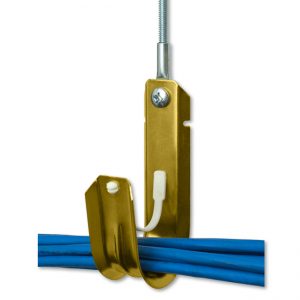 1. Understanding J Hooks and Bridle Rings
What Are J Hooks?
J hooks The Role of J Hooks and Bridle Rings in Low Voltage Cable Management
In an increasingly connected world, the importance of effective cable management cannot be overstated. As businesses and homes become more reliant on low voltage systems for networking, telecommunications, and other applications, reliable cable management solutions are critical. Among the many tools available, J hooks and bridle rings play a vital role in organizing and supporting low voltage cables. This article will explore various mounting options for these accessories, focusing on their application for beams, beam flanges, horizontal and vertical surfaces, ceiling wire, and threaded rods.
Understanding J Hooks and Bridle Rings
Before delving into the mounting options, it’s essential to define what J hooks and bridle rings are.
– J Hooks: These are curved, hook-like supports designed specifically for holding open cables. Their design allows for easy cable placement and removal, making them ideal for environments that require frequent maintenance and upgrades.
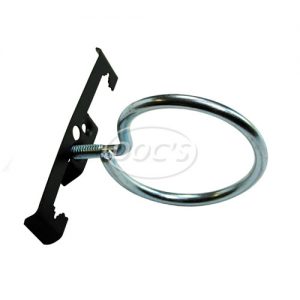
– Bridle Rings: These are circular rings used to support multiple cables at once. They help in maintaining the organization by ensuring that cables are bundled together, reducing the risk of tangling and damage.
Both accessories contribute to a tidy, efficient, and safe cable management system, which ultimately enhances performance and reliability.
1. Mounting Options for J Hooks and Bridle Rings
The versatility of J hooks and bridle rings is reflected in the variety of mounting options available. Proper installation is key to ensuring the longevity and effectiveness of your cable management system. Here are several mounting options worth considering:
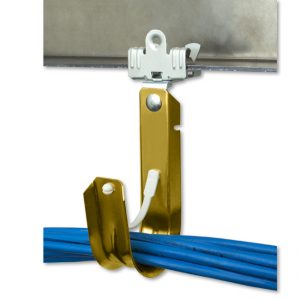 1.1 Beams and Beam Flanges
Mounting J hooks and bridle rings on beams or beam flanges is a common practice in commercial and industrial settings.
– Installation Tips:
– Use appropriate clamps or brackets to secure the hooks or rings.
– Ensure that the weight of the cables is evenly distributed to prevent any sagging or wear over time.
– Consider using a combination of J hooks and bridle rings to accommodate varying cable sizes.
1.2 Horizontal and Vertical Surfaces
For installations on horizontal or vertical surfaces, such as walls or equipment racks:
– Installation Tips:
– Drill into the Surface: Secure the hooks/rings directly to walls using screws. This method provides a solid foundation for supporting the cables.
– Utilize Wall Plates: Employ wall plates that allow for the installation of multiple hooks or rings in one area for maximum organization.
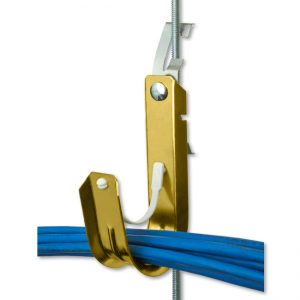 1.3 Ceiling Wire
Ceiling wire can be an excellent mounting medium for J hooks and bridle rings, particularly in open spaces.
– Installation Tips:
– Wire Support Systems: Ensure that the ceiling wire is rated for the weight loads it will carry. Use appropriate fasteners to attach your hooks or rings to the wire.
– Maintenance Accessibility: Leave adequate room around the installation for easy access during maintenance or cable adjustments.
1.4 Threaded Rod
For a more versatile mounting solution, threaded rods offer flexibility for both horizontal and vertical cable runs.
– Installation Tips:
– Create Support Systems: Use multiple rods to create a supporting framework for the hooks and rings, allowing for long spans without sagging.
– Adjustability: The use of nuts and washers on threaded rods enables height adjustments, accommodating various configurations as needed.
 2. Best Practices for Cable Management Using J Hooks and Bridle Rings
In addition to exploring mounting options, adhering to best practices when using J hooks and bridle rings can significantly enhance cable management efficiency:
1. Plan Cable Routes: Before installation, designing a comprehensive route for all cables ensures that your management system is efficient and accessible.
2. Label Cables: Clear labeling helps identify cables, especially in complex systems. This practice will save time during troubleshooting and maintenance.
3. Avoid Overloading: Each J hook or bridle ring has a weight capacity. Overloading them can lead to damage or inadequate support, so be sure to understand the limits.
J hooks and bridle rings are indispensable components of effective low voltage cable management systems. Their variety of mounting options, including beams, horizontal and vertical surfaces, ceiling wire, and threaded rods, allows for flexibility in installation while promoting organization and safety. By adhering to best practices and understanding the capabilities of these tools, businesses and homeowners alike can ensure a clean, efficient, and reliable network infrastructure. As the industry continues to evolve, investing in quality cable management solutions will remain critical to supporting modern technological demands.